Introduction
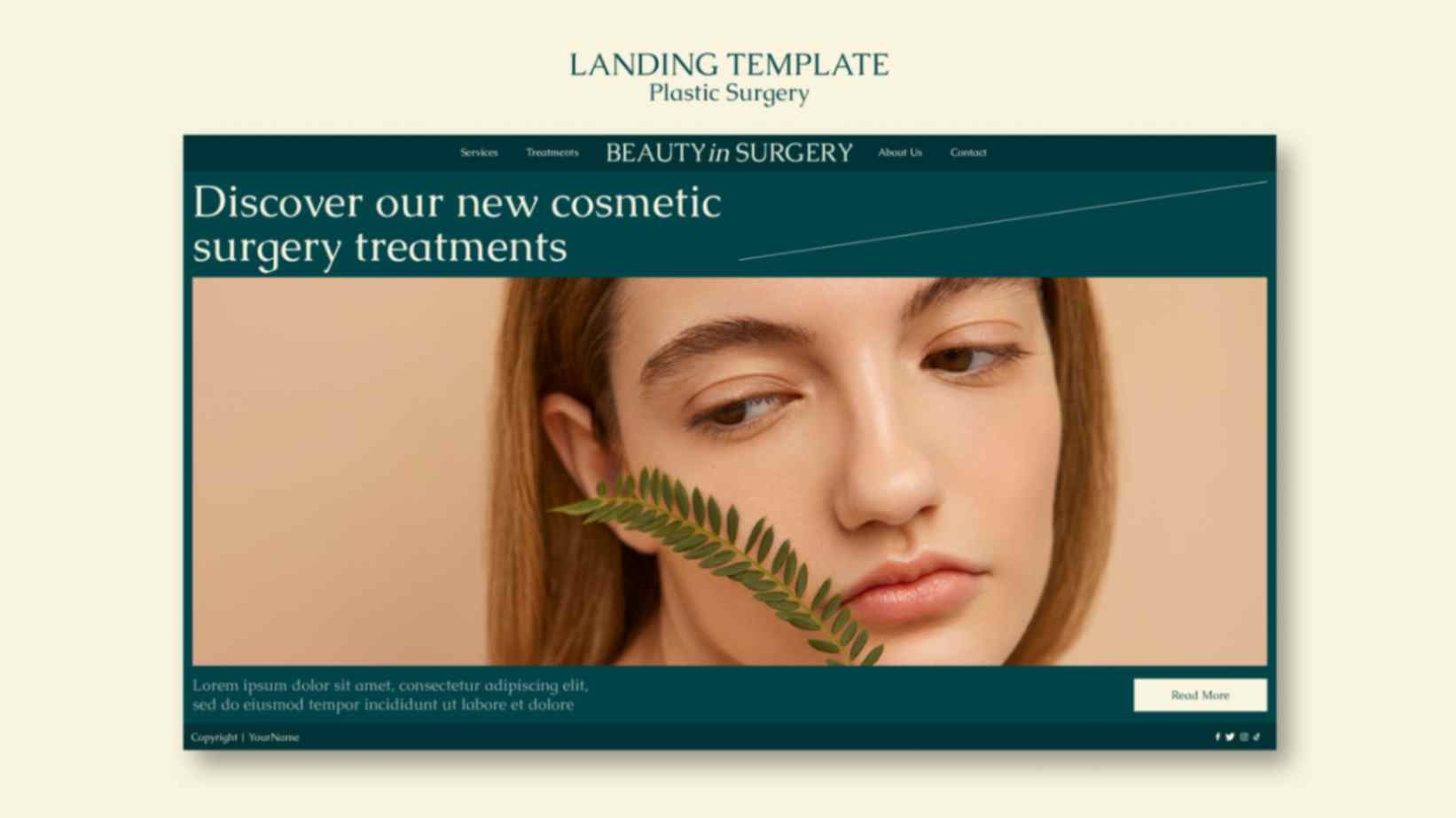
A high-converting plastic surgery website should do more than look attractive. It should help prospective patients understand procedures, evaluate the surgeon’s expertise, explore real results, and feel confident about requesting a consultation.
Effective plastic surgery website design combines trust, patient education, easy navigation, social proof, and clear calls to action. Since patients often have questions about procedures, recovery, results, and what to expect, the website should provide those answers in a simple and accessible way.
In this guide, we’ll cover the essential elements of a conversion-focused plastic surgery website, including procedure pages, before-and-after galleries, mobile design, patient reviews, SEO, security, and easy appointment booking.
Key Takeaways
- Focus on patients by providing clear answers and an easy path to consultation.
- Build trust with surgeon credentials, genuine reviews, and authentic before-and-after results.
- Create dedicated, informative procedure pages that support both patients and SEO.
- Make the website fast, mobile-friendly, easy to navigate, and simple to use.
- Use clear CTAs and secure contact or appointment forms to turn interested visitors into consultation opportunities.
What Makes a Plastic Surgery Website Design High-Converting?
A high-converting plastic surgery website helps visitors move from researching a procedure to feeling confident about requesting a consultation. It does this by providing clear answers, credible evidence, easy navigation, and a simple path to contact the practice.
For plastic surgery practices, looking professional is only the starting point. Prospective patients want to know who will perform the procedure, what the treatment involves, what results may look like, how recovery works, and what they should expect during a consultation.
A strong website reduces that uncertainty by giving patients the information they need at each stage of their decision-making process.
What Should a High-Converting Plastic Surgery Website Do?
A patient-focused website should:
- Explain procedures in clear, straightforward language
- Make the surgeon’s credentials easy to find
- Show authentic before-and-after results where appropriate
- Provide patient reviews and other trust signals
- Work smoothly on mobile devices
- Make contact and consultation requests simple
- Load quickly and provide an easy browsing experience
- Answer common patient questions
- Help search engines understand the practice and its services
The goal is not to push every visitor into booking immediately. Instead, the website should help the right visitors become informed enough to take the next step with confidence.
This makes plastic surgery web design both a user-experience and conversion strategy. Every major page should answer a patient question, establish credibility, or make the path toward consultation easier.
1. Build a Clear, Professional Homepage
Your homepage should quickly answer three questions: Who are you, what procedures do you offer, and how can patients get started? A clear homepage establishes trust and guides visitors toward relevant information or a consultation.
What Should Appear Above the Fold?
Include:
- A clear value proposition
- Surgeon or practice name
- Primary procedures
- Practice location
- Professional imagery
- A prominent consultation CTA
Use specific messaging instead of vague claims. For example:
Board-Certified Plastic Surgeon Offering Facial, Breast, and Body Procedures in [City]
How Should the Homepage Build Trust?
Add key trust signals such as:
- Surgeon credentials
- Patient reviews
- Before-and-after results
- Areas of expertise
- Professional affiliations
- Clear contact information
Keep the layout clean and easy to scan. Avoid excessive animations, clutter, and competing CTAs. The goal of plastic surgery website design is to help visitors understand the practice quickly and feel confident about taking the next step.
2. Keep the Website Navigation Simple
Patients should be able to find procedures, surgeon information, results, and contact options without searching through a complicated menu. Simple navigation makes the website easier to use and helps visitors reach the information they need faster.
How Should Plastic Surgery Websites Organize Their Navigation?
A clear menu can include:
- Procedures
- About the Surgeon
- Before & After
- Patient Resources
- Reviews
- Blog
- Contact
- Request a Consultation
Keep the number of choices manageable. A clean navigation structure helps visitors move naturally from learning about a procedure to exploring results and requesting a consultation, which is an important part of effective plastic surgery website design.
3. Create Dedicated Pages for Every Major Procedure
Each major procedure should have its own page so patients can find detailed information without digging through a general services page. Dedicated pages also help search engines understand the treatments your practice offers.
What Should a Procedure Page Include?
Keep the information patient-focused and cover:
- What the procedure is
- Who may be a candidate
- Benefits and limitations
- How it works
- Preparation and recovery
- Potential risks
- Expected results
- FAQs
- Relevant before-and-after examples
- A clear consultation CTA
A well-structured procedure page supports both patient education and SEO, making it an important part of effective plastic surgery website design.
4. Use Before-and-After Galleries to Build Trust
Before-and-after photos give prospective patients a visual way to understand potential results. When presented consistently and honestly, they can build trust, support realistic expectations, and help patients prepare for consultations.
How Should Before-and-After Photos Be Presented?
Use:
- Consistent lighting and angles
- Similar patient positioning
- Clear timelines
- Minimal or no editing
- Appropriate patient consent
How Can You Optimize the Gallery for SEO?
Make each gallery easier to understand and discover by using:
- Descriptive page titles
- Procedure-specific categories
- Relevant image alt text
- Supporting content
- Internal links to procedure pages
A well-organized gallery can strengthen both patient confidence and the overall plastic surgery website design by combining visual proof with useful information.
5. Showcase the Surgeon’s Credentials and Expertise
Patients want to know who will perform their procedure, so the surgeon’s credentials should be easy to find. Strong website design for plastic surgeons makes professional expertise clear without relying on exaggerated claims.
Trust signals can strongly influence a patient’s choice. In fact, 83% of patients say they would not consider a healthcare provider with a rating below 4 stars. This makes surgeon credentials, genuine patient reviews, and other credibility signals important parts of a trustworthy website.
What Should a Plastic Surgeon’s Profile Include?
Include:
- Education and surgical training
- Board certification
- Professional memberships
- Areas of expertise
- Relevant experience
- Hospital affiliations, where applicable
- Awards or recognitions, where relevant
How Can You Show What Makes the Practice Different?
Explain specific strengths such as specialized expertise, surgical philosophy, techniques offered, and approach to patient care.
This builds credibility while keeping plastic surgery web design informative and patient-focused. The goal is to give visitors useful evidence they can evaluate, rather than simply telling them that the practice is the best.
6. Add Patient Reviews and Testimonials
Patient reviews give prospective patients a better idea of other people’s experiences and can reduce uncertainty before a consultation. They are an important trust element in cosmetic surgery website design.
Where Should Testimonials Appear?
Consider placing genuine reviews on:
- Homepage
- Relevant procedure pages
- Consultation pages
- Dedicated reviews section
Keep testimonials authentic and easy to understand. Avoid exaggerated claims or presenting individual experiences as guaranteed results. When combined with surgeon credentials and appropriate before-and-after content, reviews can make the website feel more transparent and credible.
A thoughtful plastic surgery website design and development strategy should place social proof where it supports the patient’s decision-making process rather than treating testimonials as an afterthought.
7. Add Real Procedure Videos and Educational Visuals
Video can explain procedures in a way that long blocks of text cannot. For a plastic surgery practice, short, informative videos can help patients understand treatments, preparation, recovery, and what to expect during a consultation.
What Types of Videos Can You Add?
Consider including:
- Procedure walkthroughs
- Surgeon explanations
- Patient education videos
- Recovery guidance
- Treatment FAQs
- Facility tours
Keep videos focused on real patient questions rather than making every video promotional. Use clear production, appropriate disclaimers, and mobile-friendly formats. Also optimize video files so they do not slow down the website.
For practices investing in plastic surgery website development, educational videos and annotated visuals can make complex information easier to understand while helping visitors feel more prepared for a consultation.
8. Provide Digital Patient Intake Forms
Digital intake forms can make the transition from website visitor to consultation easier. Patients can provide relevant information before their appointment, while the practice can reduce paperwork and prepare more efficiently.
Why Should a Plastic Surgery Website Offer Digital Intake Forms?
A well-structured intake process can:
- Reduce paperwork
- Simplify patient onboarding
- Collect relevant information before appointments
- Improve appointment flow
- Give patients a more convenient experience
Depending on the practice and applicable requirements, forms may collect contact details, relevant medical history, medications or allergies, consent and disclosures, practice policies, and photo releases.
For plastic surgery website design and development, digital forms should also be easy to complete on mobile devices and handled with appropriate privacy and security measures.
9. Make Contact and Appointment Booking Easy
A visitor may be interested in a procedure but leave if contacting the practice feels complicated. A strong plastic surgery web design should make the path from interest to consultation simple.
How Can You Reduce Friction?
Make it easy for patients to:
- Request a consultation
- Call the practice
- Submit a short inquiry form
- Find the practice location
- Understand what happens after submitting a request
Keep contact options visible on important pages, including the homepage, procedure pages, header, footer, and mobile navigation.
For a plastic surgery web design company, the goal is simple: give interested visitors a clear next step without overwhelming them with too many competing CTAs.
10. Make the Website Mobile-Friendly
Your website should work just as well on smartphones as it does on desktops. Patients may browse procedures, view results, watch videos, or request consultations from their phones, so mobile usability is essential.
What Should a Mobile-Friendly Website Include?
Make sure visitors can:
- Read content without zooming
- Navigate easily
- Tap buttons comfortably
- Complete forms
- Call the practice
- View before-and-after galleries
- Watch videos without usability issues
A responsive layout, readable typography, fast-loading pages, and touch-friendly CTAs should be built into the plastic surgery website development process from the beginning.
For a plastic surgery web design agency, mobile optimization should not be an afterthought. It needs to be a fundamental aspect of the user experience.
11. Improve Website Speed and Core User Experience
A visually impressive website can still lose potential patients if its pages load slowly. This is especially important for plastic surgery websites because high-resolution photos, galleries, and videos can make pages heavy.
How Can You Make a Plastic Surgery Website Faster?
Focus on:
- Compressing large images
- Optimizing video files
- Using modern image formats
- Reducing unnecessary scripts
- Limiting heavy animations
- Improving mobile performance
- Using reliable hosting
A faster website makes it easier for visitors to browse procedures, view results, and reach the consultation page. Good plastic surgery website development should balance visual quality with speed so the design never gets in the way of the patient experience.
12. Add Social Media and Other Trust-Building Content
Social media can give prospective patients another way to learn about your practice, see educational content, and understand your approach. It can complement the website when used thoughtfully.
How Can Social Media Support Your Website?
You can use social content to:
- Share educational videos
- Highlight recent practice updates
- Answer common patient questions
- Showcase relevant content
- Provide additional social proof
- Encourage visitors to explore your online presence
An Instagram or TikTok feed can be embedded when it adds value, but it should not slow down the website or distract from important actions.
For web design plastic surgeons need to prioritize, social content should support the patient journey rather than replace essential website information. The website should remain the primary source for procedures, credentials, patient resources, and consultation details.
13. Create Patient Education and Resource Content
Patients often have questions before they are ready to schedule a consultation. Your website should answer those questions clearly instead of forcing visitors to search elsewhere.
What Questions Should Your Content Answer?
Cover practical questions such as:
- Is the procedure right for me?
- How does it work?
- How should I prepare?
- What can I expect during recovery?
- What are the potential risks?
- When can I return to normal activities?
- What should I ask during my consultation?
Useful guides, FAQs, and procedure resources can make the website more helpful while supporting SEO. A plastic surgery website design strategy should treat educational content as part of the patient experience, not just a way to add more keywords.
Keep the language simple, factual, and patient-focused so visitors can quickly understand what matters to them.
14. Optimize the Website for Plastic Surgery SEO
A well-designed website also needs to be easy for prospective patients to find in search results. SEO should be built into the website from the beginning, not added after the design is finished.
What Should You Optimize?
Focus on:
- Dedicated procedure pages
- Location-specific pages
- Relevant page titles and meta descriptions
- Clear headings
- Internal links
- Image alt text
- Before-and-after galleries
- FAQs
- Educational blog content
- Local SEO elements
Each page should match a specific patient search intent and provide a clear, useful answer. Avoid keyword stuffing or creating pages only for search engines.
Effective plastic surgery web design combines SEO for plastic surgeons with helpful, patient-focused content, helping the website attract relevant organic traffic while providing a smooth user experience.
15. Prioritize Privacy, Security, and Patient Data Protection
Plastic surgery websites may collect sensitive information through consultation forms, intake forms, and patient photographs. Protecting this information should be part of the website from the start.
What Should You Consider?
Depending on the website’s functionality, consider:
- HTTPS/SSL
- Secure contact and intake forms
- Encrypted data transmission
- Appropriate privacy disclosures
- Patient photo consent
- Secure handling of submitted information
- Applicable healthcare privacy and compliance requirements
Security should not be treated as an optional design feature. A plastic surgery website development strategy should consider how patient information is collected, transmitted, and stored while keeping the experience simple for visitors.
Also, avoid suggesting that an SSL certificate alone makes a website fully compliant. Privacy and security requirements depend on how the practice handles patient information.
16. Make the Design Visually Professional Without Overdoing It
A plastic surgery website should look polished and modern, but the design should never make important information harder to find. Good cosmetic surgery website design balances visual appeal with clarity and usability.
What Should a Plastic Surgery Website Look Like?
Use:
- Clean layouts
- Strong visual hierarchy
- High-quality, relevant photography
- Readable typography
- Consistent branding
- Appropriate white space
- Simple navigation
- Subtle animations
What Should You Avoid?
Avoid:
- Excessive animations
- Cluttered layouts
- Unrealistic stock images
- Difficult-to-read text
- Too many competing CTAs
- Distracting design elements
The best plastic surgery website design and development approach makes the practice look professional while keeping procedures, credentials, results, and consultation options easy to understand and access.
17. Measure What Turns Website Visitors Into Consultations
Launching a website is not the end of the process. You need to track how visitors interact with it to understand what is working and where potential patients are dropping off.
Which Website Metrics Should You Track?
Focus on metrics such as:
- Consultation requests
- Appointment bookings
- Phone calls
- Contact form submissions
- Organic traffic
- Procedure-page engagement
- Conversion rate
- Mobile engagement
- Landing-page performance
How Can You Improve Conversion Rates Over Time?
Use the data to identify pages that receive traffic but generate few inquiries. You can then:
- Test CTA placement
- Simplify forms
- Improve unclear content
- Update outdated pages
- Review user behavior
- Test different layouts
A plastic surgeon marketing company can use these insights to connect website performance with actual patient acquisition. The goal is continuous improvement, not simply launching a website and leaving it unchanged.
How Can a Plastic Surgery Website Convert More Visitors Into Patients?
A high-converting website should guide visitors through a simple journey: Discover → Learn → Trust → Explore Results → Take Action.
Start by helping prospective patients find the practice through SEO and useful content. Then provide clear procedure information, surgeon credentials, patient reviews, and authentic results to build confidence. Finally, make the next step simple with visible CTAs, easy contact options, and a straightforward consultation process.
No single feature guarantees more consultations. Effective website design for plastic surgeons combines helpful content, trust signals, mobile usability, fast performance, and a low-friction path to booking.
Frequently Asked Questions
Q1):- What Makes a Plastic Surgery Website High-Converting?
Ans:- A high-converting plastic surgery website combines clear navigation, helpful procedure information, surgeon credentials, patient reviews, authentic results, mobile usability, and simple consultation options. These elements help visitors build trust and take the next step.
Q2):- How Can a Plastic Surgery Website Build Patient Trust?
Ans:- A plastic surgery website can build patient trust by showing surgeon credentials, genuine reviews, authentic before-and-after results, clear procedure information, educational content, and transparent contact details. Specific evidence is more credible than broad promotional claims.
Q3):- Should Every Plastic Surgery Procedure Have Its Own Page?
Ans:- Yes, every major plastic surgery procedure should have its own dedicated page. Each page can explain candidacy, benefits, preparation, recovery, potential risks, results, FAQs, and consultation options, while also targeting relevant search queries.
Q4):- How Can a Plastic Surgery Website Generate More Consultations?
Ans:- A plastic surgery website can generate more consultations by providing clear answers, building trust, showcasing relevant results, and making the booking process simple. Prominent CTAs, short forms, click-to-call options, and easy navigation can reduce friction for interested visitors.
Also Read: 10 Proven Plastic Surgery Marketing Ideas to Grow Your Practice in 2026
Conclusion
A high-converting plastic surgery website design should do more than look professional. It should help patients understand procedures, evaluate the surgeon, build trust, and take the next step toward a consultation.
Clear navigation, dedicated procedure pages, authentic results, patient reviews, mobile usability, SEO, security, and simple CTAs all contribute to a better patient experience and more consultation opportunities.
Amplivista, a healthcare marketing agency, can help plastic surgery practices build patient-focused websites that combine professional design, SEO, and conversion-focused strategies.