Introduction
In today’s digital-first world, AI in healthcare marketing is transforming how clinics and hospitals connect with patients. Traditional, one-size-fits-all campaigns are no longer effective. Instead, healthcare providers are using AI to create personalized, data-driven experiences that better match patient needs and expectations.
The market for AI in healthcare is growing at an incredible pace, with projections estimating it will surpass $1,222 billion by 2035. This rapid growth clearly shows how important AI has become in shaping modern healthcare digital marketing strategies and improving overall campaign performance.
With the help of AI, clinics and hospitals can enhance patient engagement, automate routine marketing tasks, and make smarter decisions using real-time insights. From targeted communication to predictive analytics, AI is helping healthcare providers deliver more relevant and timely interactions.
However, the success of AI in healthcare marketing depends heavily on the quality and accessibility of data. Insights are only as powerful as the data behind them. In fact, studies show that up to 30% of valuable data insights can be lost due to fragmented systems and poor integration. This makes it essential for healthcare providers to build a strong, well-connected data infrastructure to fully benefit from AI-driven strategies.
In this blog, we’ll explore how AI is reshaping healthcare marketing, its key applications, benefits, and what the future holds for clinics and hospitals ready to adopt this technology.
Key Takeaways
- AI in healthcare marketing transforms patient engagement with personalized campaigns, predictive analytics, and automation.
- Clinics and hospitals can improve ROI and reduce operational costs by using AI tools for content creation, PPC, and SEO.
- Chatbots, virtual assistants, and AI-driven analytics enable proactive patient communication and better experience.
- Ethical use, human oversight, and compliance with HIPAA/GDPR are essential for safe and responsible AI marketing.
- Early adoption of AI provides a competitive advantage, helping healthcare providers stay ahead in a digital-first world.
What is AI in Healthcare Marketing?
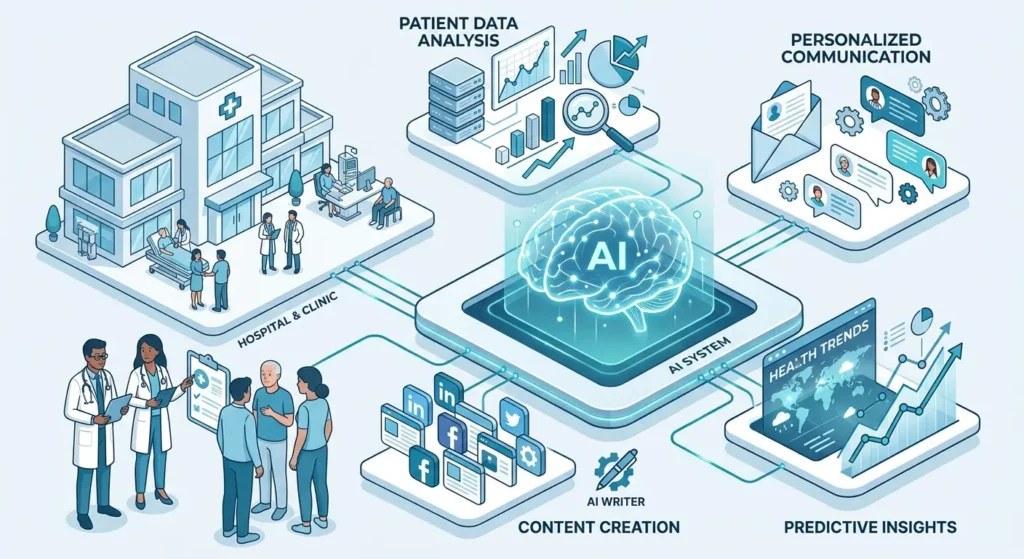
AI in healthcare marketing uses artificial intelligence to help clinics and hospitals reach patients more effectively. It goes beyond automation, enabling personalized, data-driven campaigns that deliver the right message at the right time.
AI can:
- Analyze patient behavior to tailor content.
- Predict patient needs for timely outreach.
- Generate blogs, social posts, and email campaigns efficiently.
By leveraging AI, healthcare providers can improve digital marketing strategies, automate repetitive tasks, and engage patients more meaningfully.
Core Applications of AI in Healthcare Marketing
AI offers multiple ways to enhance healthcare marketing strategies:
1. Hyper-Personalized Engagement
AI analyzes patient data, such as medical history, demographics, and behavior patterns, to deliver tailored content. For example, parents may receive pediatric health tips, while high-risk patients get reminders for flu vaccines.
2. AI-Powered Chatbots & Virtual Assistants
These tools provide 24/7 support for symptom checks, appointment scheduling, and FAQs. They can resolve up to 75% of initial patient interactions, freeing up staff for more complex tasks.
3. Predictive Analytics
Machine learning models identify patients likely to need specific services or those at risk of missing appointments, enabling clinics to conduct proactive outreach.
4. Content Creation & SEO
Generative AI can create blog posts, social media content, and email campaigns quickly, while optimizing for voice search and AI-driven search engines like Google SGE.
5. Precision Advertising
AI enhances healthcare PPC and social media campaigns by automating bid adjustments and targeting patients based on granular intent signals.
Key Benefits & Efficiency Gains
Using AI in healthcare marketing brings measurable advantages for clinics and hospitals:
- Reduced Operational Costs: Automation handles repetitive tasks like lead follow-up and data entry, saving staff time.
- Improved ROI: Targeted campaigns using first-party data boost engagement, with studies showing up to 32% higher email open rates.
- Enhanced Patient Engagement: AI chatbots provide quick responses, while predictive analytics help clinics proactively reach patients.
- Reputation Management: AI-driven sentiment analysis monitors reviews and social mentions in real time, helping address negative feedback promptly.
By adopting AI, healthcare providers can run smarter campaigns, save resources, and engage patients more effectively.
Top AI Tools for Healthcare Marketing
To make the most of AI in healthcare marketing, clinics and hospitals can leverage a variety of specialized tools:
| Tool | Function | Key Features |
| Salesforce Health Cloud | Patient Relationship Management | Unified patient views, predictive segmentation, better engagement tracking |
| Keragon | HIPAA-Compliant Automation | Automated campaign management, lead follow-up, secure data handling |
| Tableau | Data Visualization | AI-powered dashboards for analyzing campaign performance and patient insights |
| Ada Health | Patient Triage & Engagement | Conversational symptom assessments, appointment guidance |
| Mailchimp | Email & SMS Marketing | Behavioral analysis, optimized send times, automated personalized campaigns |
These tools help clinics and hospitals streamline marketing operations, target patients precisely, and improve ROI. By combining automation, analytics, and personalization, AI tools make healthcare marketing smarter and more effective.
Implementation Tips for Clinics and Hospitals
Implementing AI in healthcare marketing effectively requires a clear plan and careful execution. Here’s how clinics and hospitals can get started:
- Identify Goals & Audience: Start by defining your marketing objectives—whether it’s increasing patient appointments, boosting engagement, or improving online visibility. Understand your patient demographics and behavior to tailor campaigns effectively.
- Choose the Right AI Tools: Select AI tools that align with your clinic or hospital needs. Whether it’s for marketing automation for healthcare, content creation, predictive analytics, or healthcare SEO services, the right tools make all the difference.
- Integrate into Workflows: Ensure AI solutions are seamlessly integrated into your existing marketing processes. This helps avoid disruptions and maximizes efficiency.
- Train Your Staff: Educate your team on using AI tools properly. Staff should understand how to interpret AI insights and maintain the human touch in patient interactions.
- Monitor & Optimize Performance: Track KPIs regularly, analyze campaign results, and adjust strategies based on real-time insights. Continuous optimization ensures better engagement, ROI, and overall marketing effectiveness.
By following these steps, healthcare providers can leverage AI to run smarter, more personalized campaigns that connect with patients meaningfully while improving operational efficiency.
Critical Ethical & Compliance Considerations
While AI in healthcare marketing offers powerful benefits, it’s essential for clinics and hospitals to use it responsibly. Ensuring ethical practices and compliance protects patients and builds trust.
- Data Privacy: Patient data is highly sensitive. All AI tools must comply with regulations like HIPAA (US) or GDPR (EU) to safeguard personal health information (PHI).
- Human Oversight: AI-generated medical content should always be reviewed by qualified professionals. This prevents errors or “hallucinations” that could mislead patients.
- Transparency: Patients should be informed when interacting with AI systems, such as chatbots or AI-generated content. Clear disclosure builds trust and ensures ethical marketing practices.
- Bias & Fairness: AI algorithms can unintentionally favor certain demographics or overlook others. Clinics should monitor and adjust AI models to ensure fair and unbiased marketing to all patient groups.
By keeping these considerations in mind, clinics and hospitals can leverage AI safely and ethically, maintaining patient confidence while optimizing healthcare marketing strategies.
Challenges to Anticipate
While AI in healthcare marketing offers immense benefits, clinics and hospitals should be aware of potential challenges to ensure smooth implementation:
- High Initial Costs: Implementing AI tools and integrating them into existing workflows can require significant investment. Careful planning is essential to ensure ROI.
- Over-Reliance on Automation: While AI can handle repetitive tasks, relying solely on automation may reduce the personal touch that patients value in healthcare.
- Maintaining Human Connection: Even with AI handling communications, human interaction remains crucial for building trust and long-term patient relationships.
- Data Security Concerns: Protecting sensitive patient information is critical. Clinics must ensure AI systems are secure and compliant with HIPAA or GDPR regulations.
By understanding these challenges, healthcare providers can strategically plan AI adoption, balancing efficiency with patient-centric care for optimal results.
Future of AI in Healthcare Marketing
The future of healthcare marketing is closely tied to the continued evolution of AI technologies. Clinics and hospitals that embrace AI now will be better positioned to stay ahead of the competition.
Key Trends to Watch
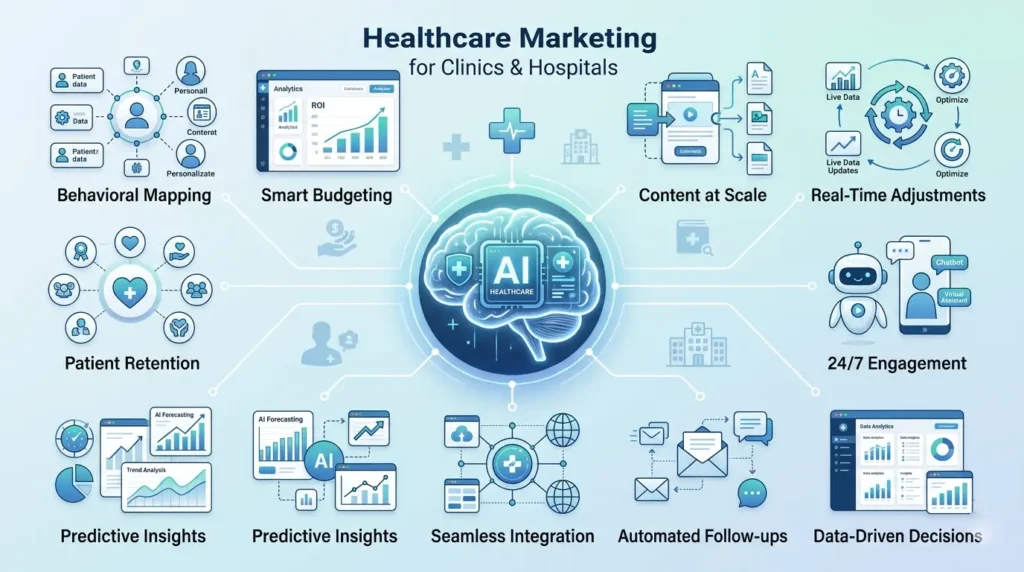
- Behavioral Personalization: AI tracks patient behavior to deliver more relevant and personalized content, improving engagement and trust.
- Smart Budgeting: AI helps allocate marketing budgets more effectively by focusing on high-performing channels, leading to better ROI.
- Content at Scale: Clinics can create consistent blogs, emails, and social media content quickly without compromising quality.
- Real-Time Optimization: Campaigns can be adjusted instantly based on performance data, ensuring better results.
- Patient Retention: AI identifies patients who may disengage and helps clinics take timely actions to retain them.
- 24/7 Engagement: Chatbots and virtual assistants provide round-the-clock support, improving patient experience.
- Predictive Insights: AI forecasts trends and patient needs, helping in smarter decision-making.
- Seamless Integration: All marketing channels work together smoothly, creating a unified patient journey.
- Automated Follow-Ups: AI ensures timely communication with leads and patients, increasing conversions.
- Data-Driven Decisions: Marketing strategies become more accurate and effective with real-time insights.
By adopting AI early, clinics and hospitals can enhance patient engagement, marketing ROI, and operational efficiency, ensuring they remain competitive in an increasingly digital healthcare landscape.
Also Read: Top Healthcare Marketing Challenges and How Digital Marketing Solves Them
Faq’s
Q1):- How does AI help clinics attract more patients?
Ans:- AI targets the right audience with PPC campaigns, improves online visibility through SEO, and delivers personalized messaging to reach potential patients effectively.
Q2):- Is AI cost-effective for small healthcare practices?
Ans:- Yes. AI reduces operational tasks, improves patient targeting, and boosts ROI, making it a smart investment even for smaller clinics.
Q3):- Can AI replace human marketers in healthcare?
Ans:- No. AI supports automation and data analysis, but humans provide creativity, strategy, and ensure campaigns remain ethical and accurate.
Q4):- What is the future of AI in healthcare marketing?
Ans:- The future includes telemedicine integration, AI-driven patient retention, voice search optimization, and hyper-personalized campaigns to improve engagement and ROI.
Conclusion
AI in healthcare marketing is transforming how clinics and hospitals engage with patients. From personalized campaigns and predictive analytics to automated content creation and precision advertising, AI helps healthcare providers improve patient engagement, operational efficiency, and marketing ROI.
While challenges like cost, compliance, and maintaining human touch exist, a strategic and ethical implementation ensures AI becomes a powerful tool rather than a risk.
Clinics and hospitals ready to embrace AI can stay ahead in the competitive healthcare landscape, offering smarter, more personalized, and efficient patient communication.
Partner with Amplivista to implement AI-powered healthcare digital marketing solutions that boost engagement, streamline operations, and grow your practice effectively.